e-Newsletter Shabbos Mevorchim Nissan -Vayakhel/Pekudei and Parshas Hachodesh

Having trouble viewing this email? View it online

Chabad of Tarzana• 818-758-1818 • ChabadofTarzana.com
E- NEWSLETTER
In loving memory of Rabbi Joshua B. Gordon ob"m 

בס"ד
What's New @ Chabad

No Kiddush To Go this week. If you would like to sponsor a Kiddush to go, please email  [email protected] or call Meredith at 818-758-1818.

DON'T FORGET TO CHANGE YOUR CLOCKS! 
Daylight Savings Begins

This Sunday, March 14th at 2:00 am
advance your clocks 1 hour 

PARSHA RESOURCES
Click here for a comprehensive library of articles and discussions about this week's Parsha. Please remember to print them before Shabbos.

* * *
SHABBOS SERVICES

  • Friday afternoon Mincha/Kabbolas Shabbos -  5:55 pm
  • Shabbos Mevorchim Tehillim - 8:00 am
  • Shabbos morning Shacharis - 9:00 am
  • Parshas Hachodesh - 10:10 am
  • Shabbos afternoon Mincha -  5:50 pm

We will continue to conduct all synagogue services outdoors, weather permitting.

* * *
Parshas Hachodesh  

On the Shabbos that falls on or before the first day of the month of Nissan, we read an additional Torah portion, the section of Hachodesh (Exodus 12:1–20), which relates G‑d’s words to Moses in Egypt two weeks before the Exodus, instructing us to set the  Jewish calendar by the monthly  new moon, and to regard Nissan as the  “head of months.” G‑d also instructs to bring the  Passover offering, to eat it with  matzah and  bitter herbs, and to abstain from  leaven for seven days. The portion of Hachodesh can be found in  Parshat Bo in the book of Exodus, Chapter 12

* * *
Shabbos Mevorchim - Blessing the New Month

The molad for the upcoming month of Nissan will be Shabbos, March 13th at 7:03 PM and 5 chalakim

It is a Chabad custom to recite the entire book of Psalms before morning prayers, and to conduct farbrengens (chassidic gatherings) in the course of the Shabbat.  Please join us for the reciting of the entire Tehillim at Chabad this Shabbos beginning at 8:00 am.

The blessing for the new month can be found on pg. 231 in the gray box.

* * *
RECITING THE NASI
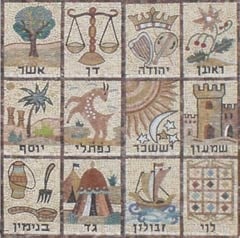
gLig3959733.jpgThe Mishkan - Tabernacle - was inaugurated on the first day of of Nissan over 3,300 years ago. Each day from the 1st of the month through the 12th, a different nasi - tribal leader - brought an inaugural offering as the representative of his tribe.

In commemoration of this, each year over the first 12 days of Nissan, we read the verses from the Torah which describe the offerings of that day’s nasi . These verses are traditionally read after the morning prayers, but can be recited anytime throughout the day.The text for the Nasi begins on page 391 of the blue Chabad Siddur or you can click on the links below for the full text. 

Text of the Nasi - English

Text of the Nasi - Hebrew

* * *
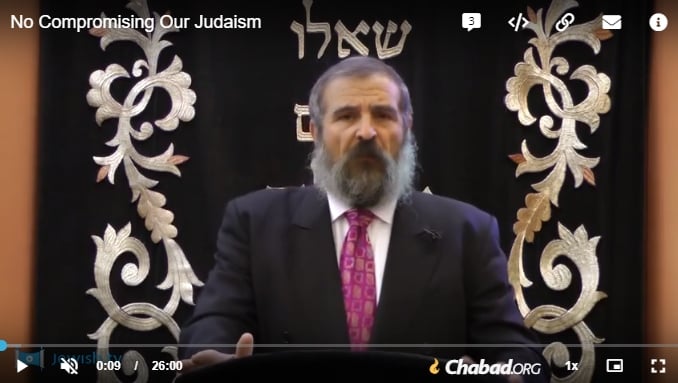
Watch:  Life Lessons from the Parsha
By Rabbi  Joshua B. Gordon ob'm
THE POWER OF BLESSING
(click on the video below)
www.chabadofthevalley.com/2503569

* * *
LIVE ONLINE TORAH CLASSES
_____________________________________________________________

MONDAY NIGHTS - 7:00 PM
Bed Time Stories for Children:

To join go to: chabadofthevalley.com/bedtimestory
____________________________________________________________

WEDNESDAYS - 7:30 PM
Pre Passover Talmud Class:
The tractate of Pesachim

- Given by Rabbi Chaim Abenaim

To join go to :  chabadofthevalley.com/t almud

A thought for the week

In addition to the regular Torah portion, this week we read the final of four special readings related to the current time of year: the establishment of the Jewish calendar in preparation for the holiday of Passover.

All Jewish holidays occur on particular dates, and these holidays include various laws and observances as commanded in the Torah (such as eating matzah and avoiding chametz on Passover, eating in a sukkah and shaking the lulav on Sukkot, avoiding work on the holidays, and so on), so we could assume that the dates of these holidays are also determined by G-d in the Torah.

But this Torah reading tells us that the opposite is true. The Jewish calendar is set by the Jewish people, based on when witnesses saw the new moon and testified as much in the courts. And when necessary, the courts would postpone hearing the testimony in order for the month to begin and end on predetermined dates. Even today, we follow a perpetually set calendar which was set by man, not G-d.

This is G-d’s reminder to us that He expects us to be a partner in His Torah and His creation. We have the divinely given tools and ability to bring G-dliness into the world we inhabit, and G-d depends on us, so to speak, to make spirituality a reality.

Shabbat shalom

 
Ralph's Community Contribution Program

To Use the Ralphs Community Rewards Program:

  • Go to Ralphs.com
     
  • Click on “Menu” on the left side of the screen
     
  • Scroll down to “Savings” (after “Departments”)
     
  • Click on “Savings”
     
  • Scroll down to the bottom to “Community Contribution Program” and follow the instructions for linking your card to Chabad of the Valley.
     
  • Click on “Link to shopper’s card” and write our organization’s name (Chabad of the Valley) and the organization’s number (MG222).
 

This Week @ www.ChabadoftheValley.com
   
By the Numbers
14 Kosher Myths and Facts
Are you ready to challenge some of the things you’ve always thought to be true about the Jewish dietary laws? Let’s begin!
   
Essay
Is Passover Headed Towards Obsolescence?
Just the other day, you did something that will last forever.
   
Parshah
Stop Thinking and Start Doing
Sometimes, it’s time to put the self-help books aside and jump into the action.
   
Your Questions
Why Does the Jewish Calendar Follow the Moon?
Our sages tell us that the Jews count based on the moon and are compared to the moon.
 
Chabad-Lubavitch News from Around the World
   
Holiday Watch
1 Million Pounds of Shmurah Matzah: How Passover Production Continues to Rise
   
Obituary
David Dinkins and the Rebbe: Advice and Blessing in a Time of Turmoil
   
South America
With Israel Trip Canceled, a South American Study Vacation Becomes a Life-Changer
   
Book Bag
‘Four Keys of Kabbalah’: A Relatable Introduction to Jewish Mysticism

    
Candle Lighting Times for
Tarzana:
Shabbat Candle Lighting (Vayak'hel-Pekudei):
Friday, Mar. 12
5:42 pm
Shabbat Ends:
Shabbat, Mar. 13
6:43 pm

Rosh Chodesh Nissan Sun. March 14th

Shabbat Schedule

Friday Evening
Mincha - 5:55 pm
Followed immediately by
Kabbolas Shabbos & Maariv

Shabbat Morning 
Latest Shema - 9:03 am
Tehillim - 8:00 am
Shachris - 9:00 am

Shabbat Afternoon 
Mincha - 5:50 pm

Weekly Schedule

Shachris at Chabad of Encino
Sunday - 8:00 am
Monday - Friday - 7:00 am

Mincha at Chabad of Tarzana
Sunday - Thursday - 6:55 pm

Quote of the Day
I pray with the mind of a child
— Rabbi Isaac ben Sheshet ("Rivash")
Parshah

Parshat Vayak'hel-Pekudei

Moses assembles the people of Israel and reiterates to them the commandment to observe the Shabbat. He then conveys G‑d’s instructions regarding the making of the Mishkan (Tabernacle). The people donate the required materials in abundance, bringing gold, silver and copper; blue-, purple- and red-dyed wool; goat hair, spun linen, animal skins, wood, olive oil, herbs and precious stones. Moses has to tell them to stop giving.

A team of wise-hearted artisans make the Mishkan and its furnishings (as detailed in the previous Torah readings of Terumah, Tetzaveh and Ki Tisa): three layers of roof coverings; 48 gold-plated wall panels, and 100 silver foundation sockets; the parochet ( veil) that separates between the Sanctuary’s two chambers, and the masach ( screen) that fronts it; the Ark and its cover with the Cherubim; the table and its showbread; the seven-branched menorah with its specially prepared oil; the golden altar and the incense burned on it; the anointing oil; the outdoor altar for burnt offerings and all its implements; the hangings, posts and foundation sockets for the courtyard; and the basin and its pedestal, made out of copper mirrors.

An accounting is made of the gold, silver and copper donated by the people for the making of the Mishkan. Betzalel, Aholiav and their assistants make the eight priestly garments—the ephod, breastplate, cloak, crown, turban, tunic, sash and breeches—according to the specifications communicated to Moses in the Parshah of Tetzaveh.

The Mishkan is completed and all its components are brought to Moses, who erects it and anoints it with the holy anointing oil, and initiates Aaron and his four sons into the priesthood. A cloud appears over the Mishkan, signifying the divine presence that has come to dwell within it.


Parshat Hachodesh

This being the Shabbat that falls on or before the first of Nissan, we also read the section of Hachodesh (Exodus 12:1–20), which relates G‑d’s words to Moses in Egypt two weeks before the Exodus, instructing us to set the Jewish calendar by the monthly new moon, and to regard Nissan as the “head of months.” G‑d also instructs to bring the Passover offering, to eat it with matzah and bitter herbs, and to abstain from leaven for seven days.