e-Newsletter Tarzana Shabbos Yud Beis Tammuz, Parshas Chukas/Balak

Having trouble viewing this email? View it online

Chabad of Tarzana• 818-758-1818 • ChabadofTarzana.com
E- NEWSLETTER
In loving memory of Rabbi Joshua B. Gordon ob"m 
 

בס"ד
  What's New @ Chabad

Kiddush sponsored by the Izaac Family in commemoration of the yahrzeits of Yaakov ben Yitzchok, & Mayer ben Yitzchok obm.

Farbrengen sponsored by the Dadon Family and Ventura Kosher in honor of Yud Beis Tammuz


WEEKLY TORAH CLASSES

  • Wed Nights: A Chassidishe Derher - Men's Class
  • Shabbos: 
  •     - Inside Information - Chassidus on the  Parsha
        - Moshiach & Geulah - Women's Class 
        
    - Pirkei Avos Women's Class 

PARSHA RESOURCES
Click here for a comprehensive library of articles and discussions about this week's Parsha. Please remember to print them before Shabbos.

* * *
SHABBOS SERVICES

  • Friday afternoon Mincha/Kabbolas Shabbos - 8:00 pm
  • Chassidus Class - 9:15 am 
  • Shabbos morning Shacharis - 10:00 am
  • Jr. Congregation - 11:45 am
  • Kiddush/Farbrengen - Following Musaf
  • Mincha - Following Kiddush
  • Women's Class - Following Kiddush 
  • Maariv - 9:15 pm 

* * *  
 There will be a Kiddush/Farbrengen at Chabad 
this Shabbos in honor of Yud Beish Tammuz

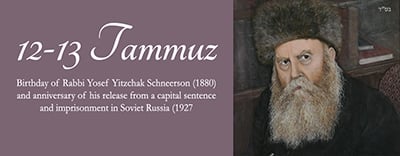
Click here to learn more about Yud Beis Tammuz.

* * *
 17th of Tammuz - Thursday, July 2

This Thursday we observe the Fast of the 17th of Tammuz. To learn more about the 17th of Tammuz - its History, Laws  and  Customs,   PLEASE CLICK HERE


From the 17th of Tammuz until the 9th of Av, we enter into a stage of mourning known as 'The Three Weeks.' To learn about the Laws and Customs of the The Three Weeks,  PLEASE CLICK HERE

Fast begins4:09 am           Fast ends8:39 pm


* * *
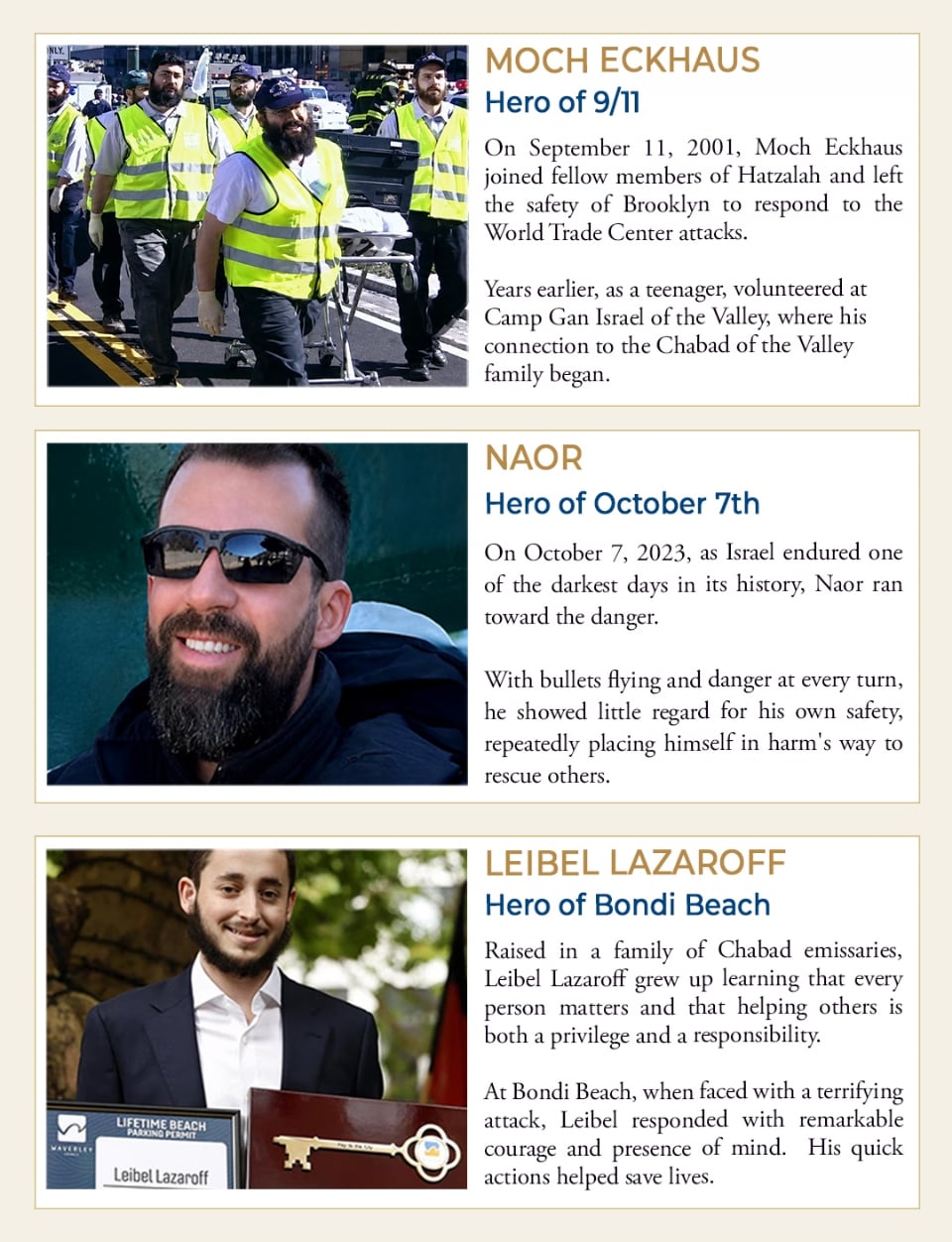
CHABAD GALA 2026
To reserve go to  
chabadofthevalley.com/gala


* * *

THE FINDER FAMILY CAMP GAN ISRAEL
Week #1

 
A thought for the week
 

One of the privileges of getting older is having memories to look back on. It also comes with the temptation to compare the present to the past. We remember a time when people were more connected, and seemed more patient or more focused. Whether those memories are completely accurate or not, there is something comforting about what is familiar.

The challenge is that nostalgia alone does not preserve what we value. If we want the best parts of the past to remain part of our lives, we have to actively carry them forward. And the Torah gives us a prime example of this: After Miriam and Aaron passed away, the Jewish people lost two sources of blessing that had accompanied them throughout their journey in the desert. Rather than simply mourning what was lost, Moses stepped forward and ensured that those blessings continued. He understood that when something precious is in danger of disappearing, it becomes our responsibility to sustain it.

This message connects with the 12th of Tammuz, the day when the Previous Rebbe, Rabbi Yosef Yitzchak Schneersohn, was liberated from Soviet imprisonment in 1927. At a time when Jewish life was under tremendous pressure, he refused to accept that Judaism belonged only to the past. He risked everything to preserve Jewish life, ensuring that future generations would inherit a living Judaism rather than just memories of one.

Each of us has the ability to do the same. The future of Jewish life is not built by someone else; it’s built by ordinary people who care enough to carry forward what matters.

Shabbat shalom,

 
  Ralph's Community Contribution Program

To Use the Ralphs Community Rewards Program:

  • Go to Ralphs.com
     
  • Click on “Menu” on the left side of the screen
     
  • Scroll down to “Savings” (after “Departments”)
     
  • Click on “Savings”
     
  • Scroll down to the bottom to “Community Contribution Program” and follow the instructions for linking your card to Chabad of the Valley.
     
  • Click on “Link to shopper’s card” and write our organization’s name (Chabad of the Valley) and the organization’s number (MG222).


This Week @ www.ChabadoftheValley.com
   
By the Numbers
12 Facts About the Mysterious Red Heifer
One of the Torah’s most enigmatic commandments that left even King Solomon, the wisest of all humans, utterly perplexed.
   
Your Questions
Do Jews Believe in Magic or Witchcraft?
The answer seems simple enough: The Torah itself references witchcraft . . .
   
Quiz
10 Questions: Take the Holy Temple Quiz
What do you know about this holiest spot on earth?
   
History
The Forgotten Pioneer of Chabad Women’s Activism
 
Chabad-Lubavitch News from Around the World
   
Ukraine War
Despite Heavy Fire, School Year Ends Safely in Odesa, Ukraine
   
North America
Pensacola, Fla., Celebrates Historic Opening of First Mikvah
   
North America
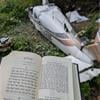
Deadly Maryland Plane Crash Claims Three Jewish Men
   
News Brief
Two Killed, One Critically Wounded in Shooting Near Montreal Jewish Neighborhood


Candle Lighting Times for
Tarzana:
Shabbat Candle Lighting (Chukat-Balak):
Friday, Jun. 26
7:52 pm
Shabbat Ends:
Shabbat, Jun. 27
8:54 pm
Torah Portion: Chukat-Balak

Pirkei Avos: Chapter 5

Shabbat Schedule

Friday Evening
Mincha - 8:00 pm

Shabbat Morning
Torah Class - 9:15 am
Latest Shema - 9:18 am
Shachris - 10:00 am
Jr. Cong - 11:45 am
Kiddush - Following Musaf
Mincha - Following Kiddush
Women's Class - Following Kiddush

Motzei Shabbos
Shabbos Ends - 8:54 pm
Maariv - 9:15 pm

Weekly Schedule

Shacharis at Chabad of Encino
Sunday - 8:00 am
Monday - Friday - 7:00 am & 8:00 am

Mincha at Chabad of Tarzana
Sunday - Wednesday - 8:00 pm
Thurs. 17th of Tammuz - 7:50 pm

Quote of the Day
One who learns Torah in order to teach, is given the opportunity to learn and teach. One who learns in order to do, is given the opportunity to learn, teach, observe and do.
— Ethics of the Fathers 4:5
Parshah

Parshat Chukat-Balak

The name of the Parshah, “Chukat,” means “Statute [of the Torah]” and it is found in Numbers 19:2. The name of the Parshah, “Balak,” refers to Balak, king of Moab, and it is found in Numbers 22:2.

Moses is taught the laws of the Red Heifer, whose ashes purify a person who has been contaminated by contact with a dead body.

After 40 years of journeying through the desert, the people of Israel arrive in the wilderness of Zin. Miriam dies and the people thirst for water. G-d tells Moses to speak to a rock and command it to give water. Moses gets angry at the rebellious Israelites and strikes the stone. Water issues forth, but Moses is told by G-d that neither he nor Aaron will enter the Promised Land.

Aaron dies at Hor Hahar and is succeeded in the High Priesthood by his son Elazar. Venomous snakes attack the Israelite camp after yet another eruption of discontent in which the people "speak against G-d and Moses"; G-d tells Moses to place a brass serpent upon a high pole, and all who will gaze heavenward will be healed. The people sing a song in honor of the miraculous well that provided the water in the desert. Moses leads the people in battles against the Emorite kings Sichon and Og (who seek to prevent Israel's passage through their territory) and conquers their lands, which lie east of the Jordan.

Balak, the King of Moab, summons the prophet Balaam to curse the people of Israel. On the way, Balaam is berated by his donkey, who sees the angel that G-d sends to block their way before Balaam does. Three times, from three different vantage points, Balaam attempts to pronounce his curses; each time, blessings issue instead. Balaam also prophesies on the end of days and the coming of Moshiach.

The people fall prey to the charms of the daughters of Moab and are enticed to worship the idol Peor. When a high-ranking Israelite official publicly takes a Midianite princess into a tent, Pinchas kills them both, stopping the plague raging among the people.

Learn: Chukat-Balak in Depth
Browse: Chukat-Balak Parshah Columnists
Prep: Devar Torah Q&A for Chukat-Balak
Read: Haftarah in a Nutshell
Play: Chukat-Balak Parshah Quiz