e-Newsletter Tarzana - Shabbos Parshas Nitzavim/Vayielech

Having trouble viewing this email? View it online

Chabad of Tarzana• 818-758-1818 • ChabadofTarzana.com
E- NEWSLETTER
In loving memory of Rabbi Joshua B. Gordon ob"m 
 

בס"ד
  What's New @ Chabad

Kiddush sponsored by The Kourbatsky Family in honor of Rina Esther Kourbatsky’s Bat Mitzvah - Mazel Tov!

To sponsor a Kiddush please email  [email protected] or call Meredith at 818-758-1818.

UPCOMING EVENTS

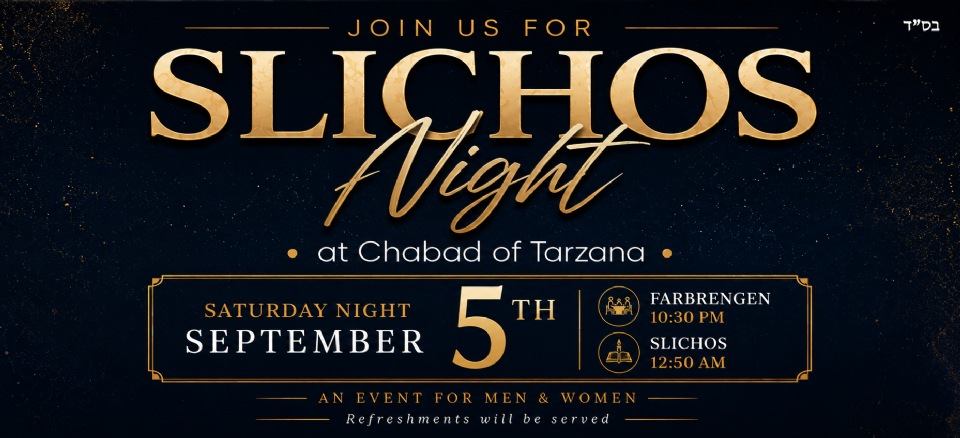
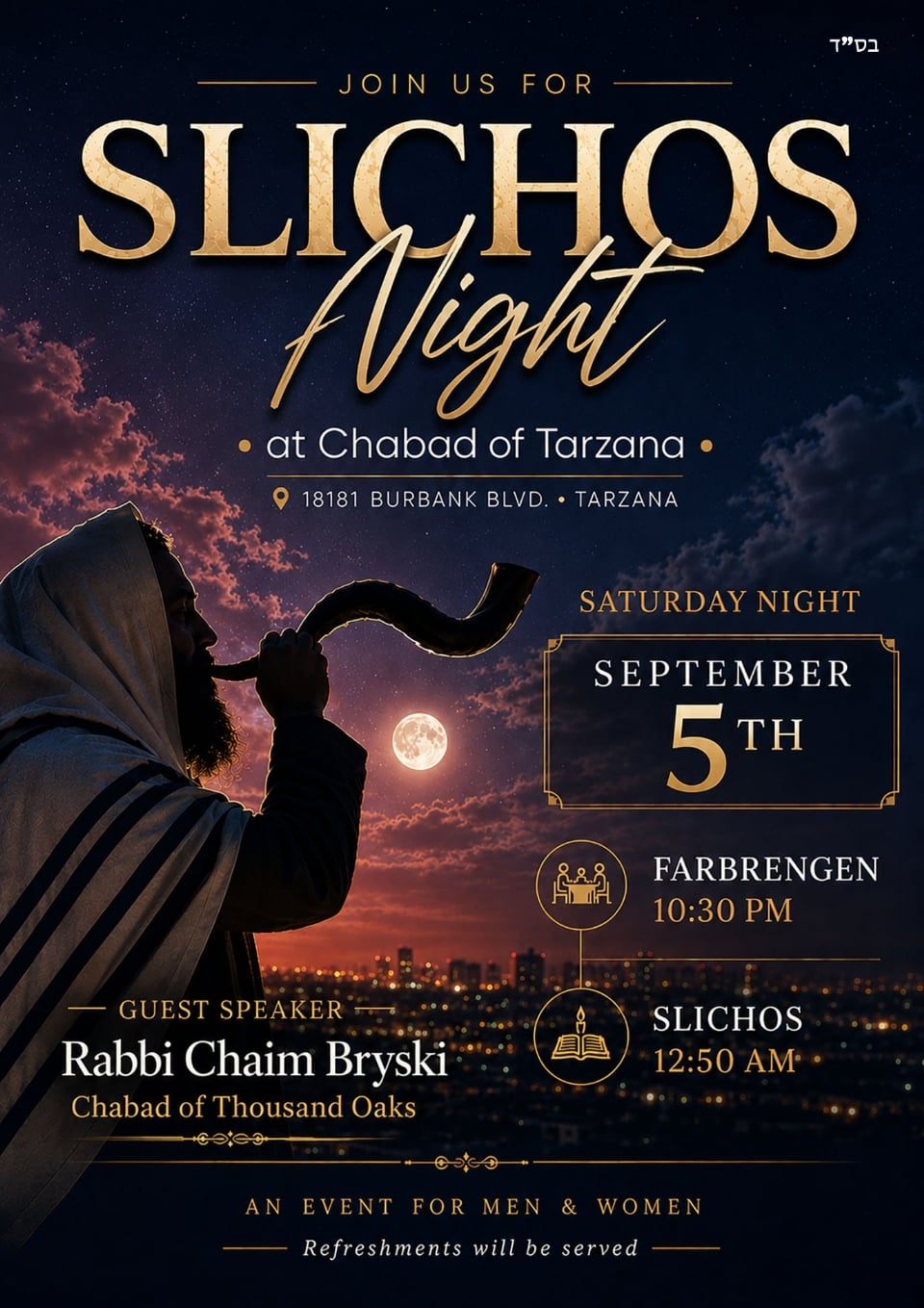
  • Motzei Shabbos Sept 5th: Farbrengen and Slichos
  • Mon. Sept 28th: Simcha in the Sukkah 
  • Tues. Sept 29th: Simchas Beis Hashoeiva
  • Tues. Sep. 29th: Sukkos Family Fun Day
  • Thurs. Night Oct. 1st: Hoshana Rabbah Farbrengen 
  • Motzei Shabbos Oct. 3rd: Grand Hakafos Celebration
  • Sunday Oct. 4th: Simchas Torah Luncheon 


WEEKLY TORAH CLASSES

  • Wed Nights: A Chassidishe Derher - Men's Class
  • Thurs Nights: Beis Medrash Learning - Men's Class
  • Shabbos: 
        - Inside Information - Chassidus on the  Parsha
        - Moshiach & Geulah - Women's Class 
        
    - Pirkei Avos Women's Class 
  • Sunday Mornings: Tanya - Women's Class 

PARSHA RESOURCES
Click here for a comprehensive library of articles and discussions about this week's Parsha. Please remember to print them before Shabbos.

* * *
SHABBOS SERVICES

  • Friday afternoon Mincha/Kabbolas Shabbos - 7:10 pm
  • Tehillim - 8:45 am 
  • Shabbos morning Shacharis - 10:00 am
  • Jr. Congregation - 11:45 am
  • Kiddush - Following Musaf
  • Mincha - Following Kiddush
  • Women's Class - Following Kiddush 
  • Maariv - 8:15 pm
  • Fabrengen - 10:30 pm
  • Slichos - 12:50 am 

* * *
SHABBOS MEVORCHIM?

Every Shabbos that precedes a new month is called Shabbos Mevorchim since we bless the upcoming new month. The only month that we don't bless is the month of  Tishrei. Why do we not bless this month, and who then blesses this holy month?

There is a Chassidic teaching that "The month [Tishrei], which is the first month of the year, G‑d Himself blesses the Jews on Shabbos Mevorchim, which is the last Shabbos of the month of Elul. This gives Israel the power to bless the months of the upcoming new year.

Though we don't recite the actual blessing for the upcoming month it is still customary to recite the entire book of tehillim on this Shabbos.

* * *
Slichos Begins   Saturday night, Sept. 28th
Farbrengen - 10:30 pm
Followed by Slichos - 12:45 am

To download a pdf of Slichos for Motzei Shabbos,  please click here.

The series of   Slichos ("supplication") prayers recited in preparation for the "Days of Awe" of Rosh Hashanah and Yom Kippur begin this Saturday night, after midnight. On subsequent days, the custom is to recite the Selichot in the early morning hours, before the morning prayers, each morning up to and including Elul 29, the eve of Rosh Hashanah.

* * *

LAST CHANCE TO RESERVE SEATS.   Click here


Rosh Hashana Megasite -  Click here

Full High Holidays Schedule -  Click here


* * *

* * *
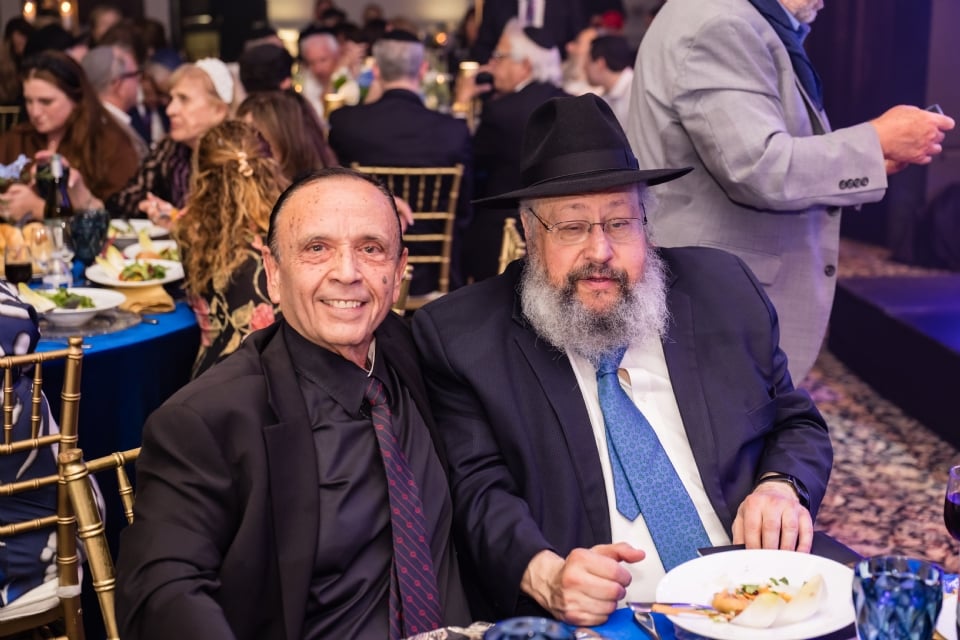
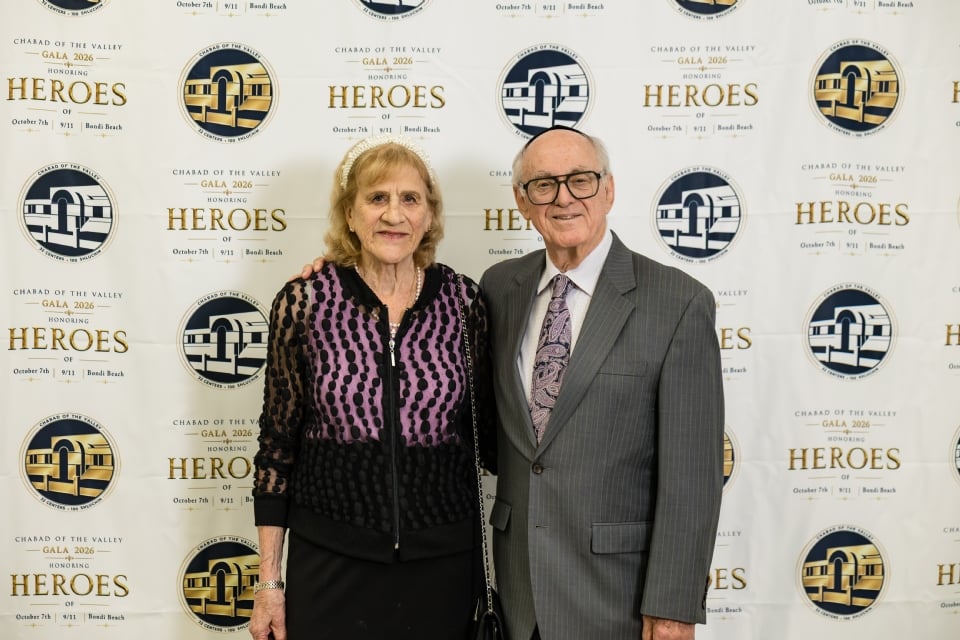
HEROES GALA 2026 - PICTURE GALLERY

* * *
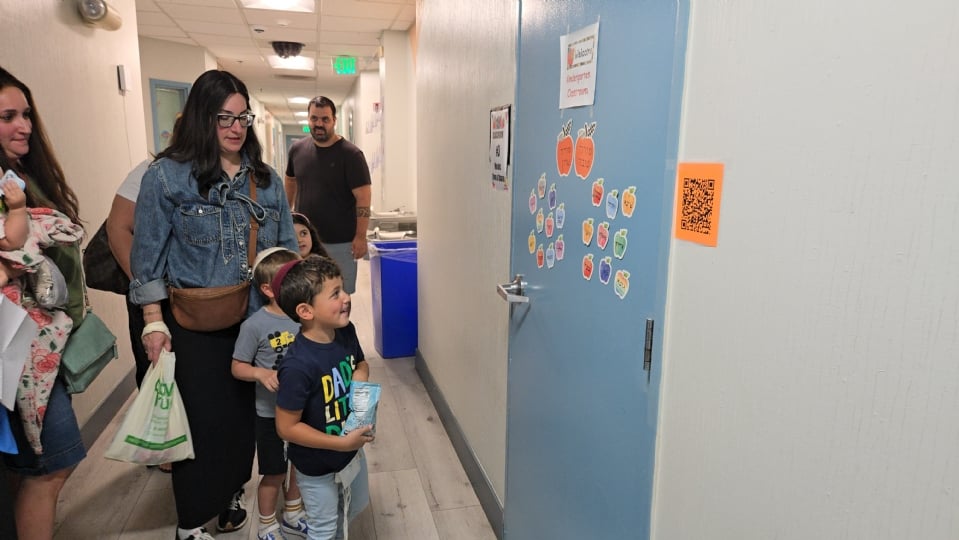
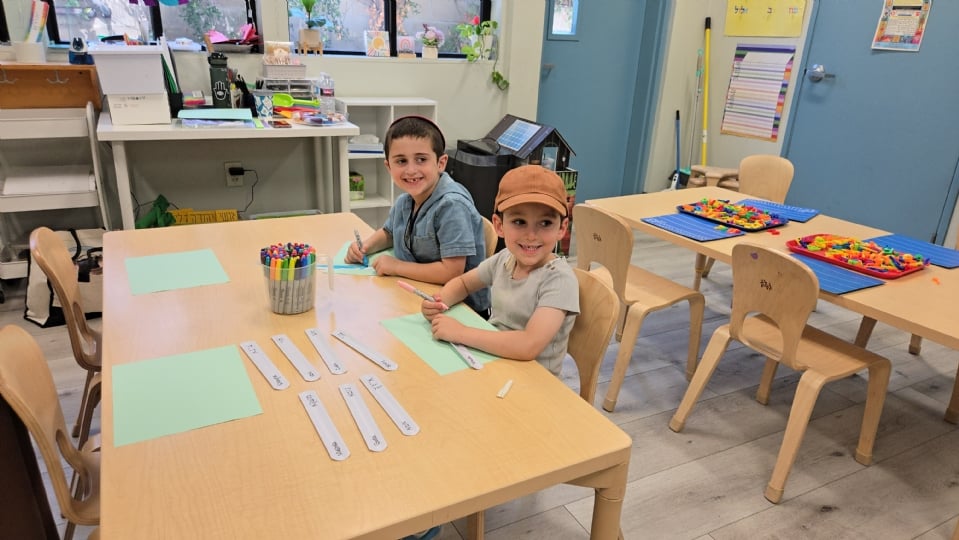
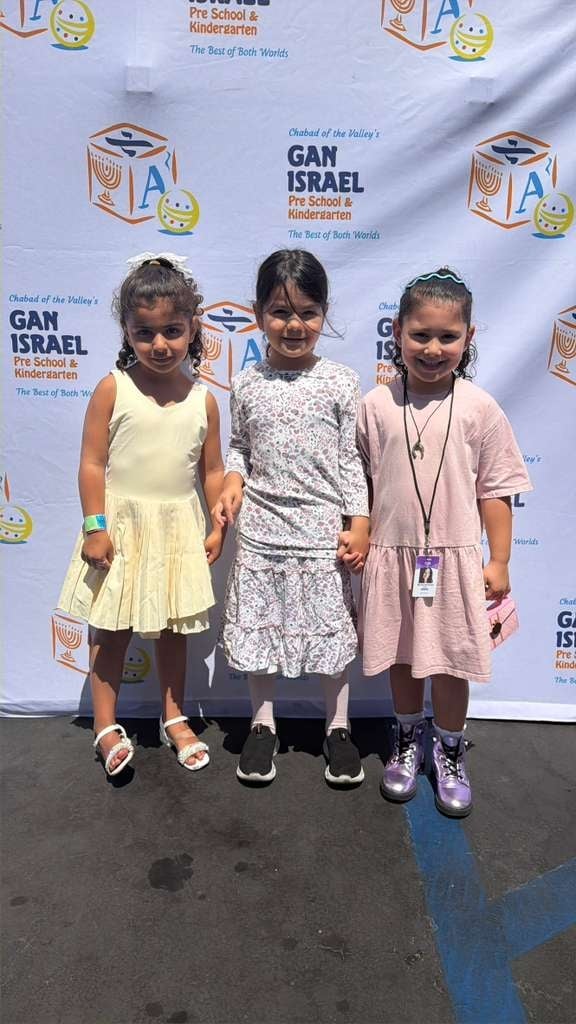
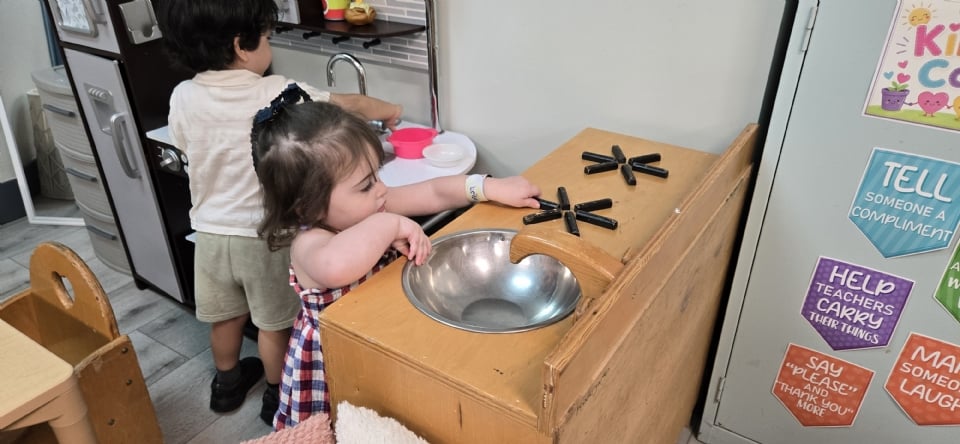
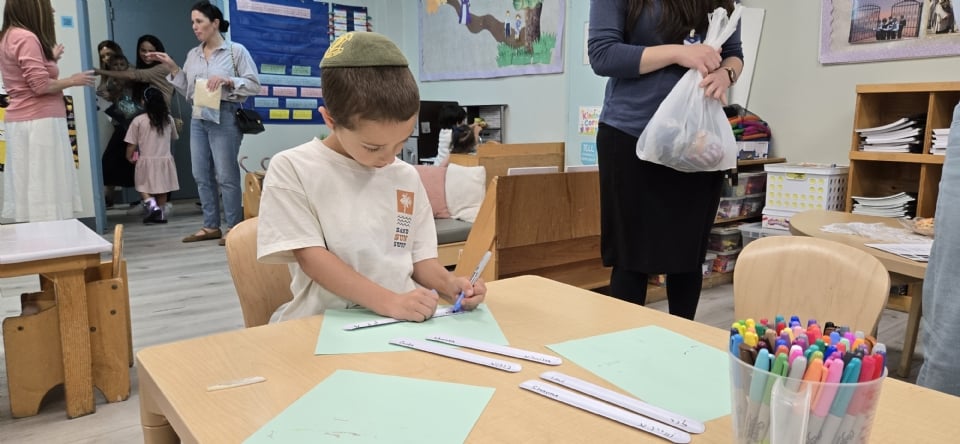
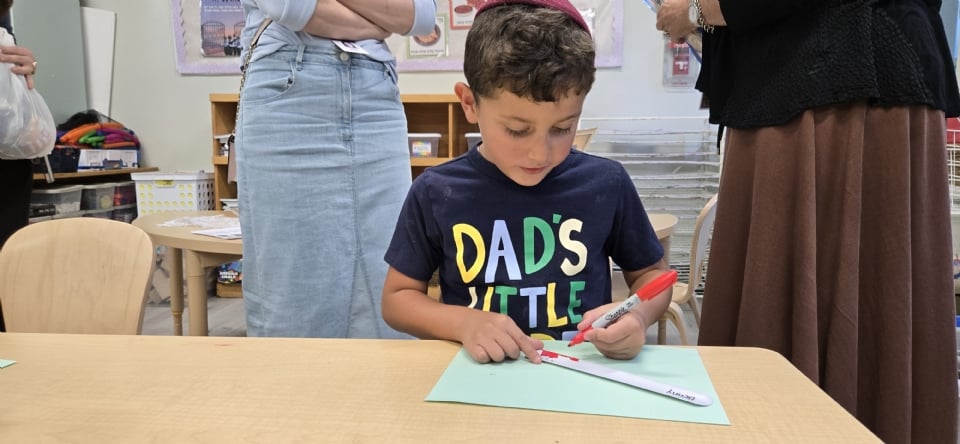
GAN ISRAEL SCHOOL BEGINS 5786-5787

* * *
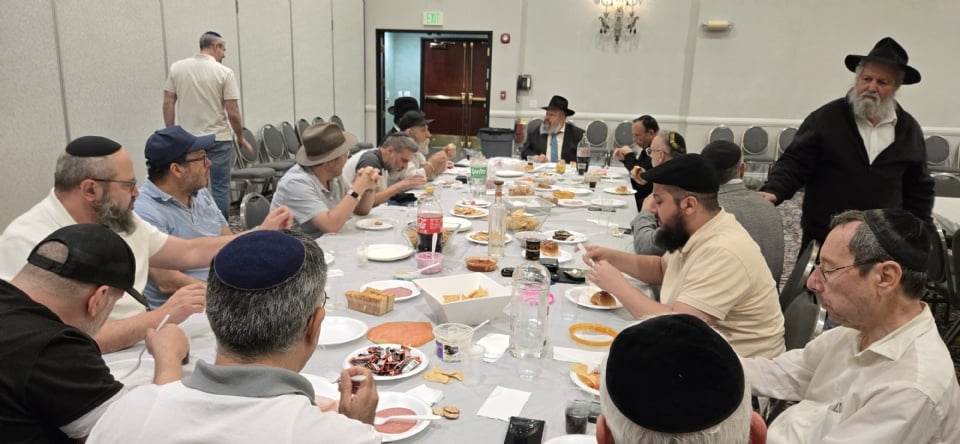
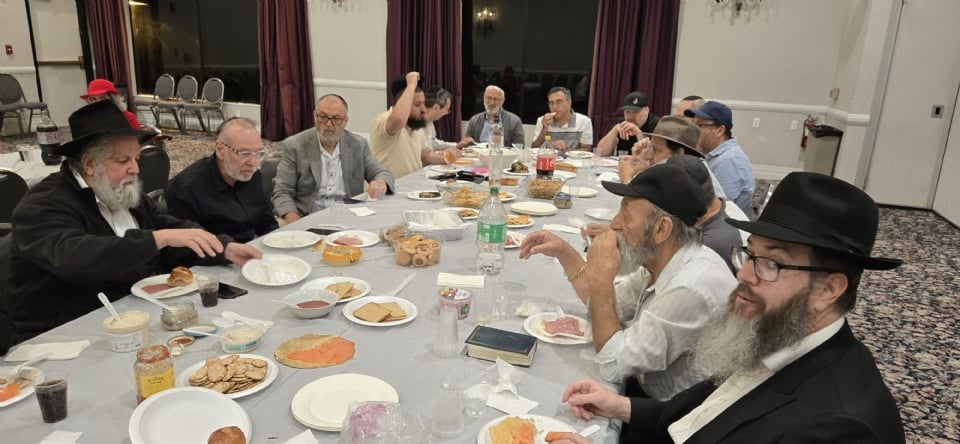
CHAI ELUL FARBRENGEN

 
A thought for the week
 

There’s something powerful about everyone showing up. At a wedding, graduation, or championship game, the experience feels different when everyone is there. We’re reminded that we’re part of something larger than ourselves.

This week’s Torah portion gives us a similar image as we approach Rosh Hashanah. The Torah says, “You are all standing here today.” The Baal Shem Tov taught that “today” refers to Rosh Hashanah. Before the new year begins, every Jew stands together before G-d.

The Torah then goes out of its way to list all kinds of people: leaders and followers, scholars and workers, woodchoppers and water-carriers.

Jewish unity doesn’t mean we’re all the same. Each of us has a different background and role. Yet on Rosh Hashanah, we’re reminded that beneath all those differences, we share the same essential connection.

This Saturday night, we begin saying Selichot, the special prayers traditionally recited in the days leading up to Rosh Hashanah. Selichot give us an opportunity to reflect on the year that’s ending and to think about the kind of year we want to build.

But preparation for Rosh Hashanah isn’t only about prayer. It’s also about how we show up for other people. An act of kindness or simply being there for someone who needs us can turn the ideals of the High Holidays into something real.

As we prepare for the new year, may we all stand together, each in our own way, and enter the year ahead with greater purpose and joy.

Shabbat shalom,

 
  Ralph's Community Contribution Program

To Use the Ralphs Community Rewards Program:

  • Go to Ralphs.com
     
  • Click on “Menu” on the left side of the screen
     
  • Scroll down to “Savings” (after “Departments”)
     
  • Click on “Savings”
     
  • Scroll down to the bottom to “Community Contribution Program” and follow the instructions for linking your card to Chabad of the Valley.
     
  • Click on “Link to shopper’s card” and write our organization’s name (Chabad of the Valley) and the organization’s number (MG222).


This Week @ www.ChabadoftheValley.com
   
By the Numbers
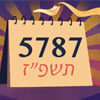
6 Ways This Year (5787) Is Unique
It's the longest year possible; it begins and ends with Shabbat, and more!
   
Your Questions
Why All the Symbolic Rosh Hashanah Foods?
Why are we rational Jews doing something that seems superstitious?
   
Freeman Files
The Czar in the Field
   
Quiz
Take the Rosh Hashanah Who Am I Quiz
Test your Rosh Hashanah knowledge!
 
Chabad-Lubavitch News from Around the World
   
North America
Inside a Room Full of American Warriors in Tefillin
   
Australia & New Zealand
‘Magical Mendy’ Celebrates His Bar Mitzvah in Melbourne
   
The Far East
As Rosh Hashanah Approaches, 30 Jews Among the Missing in Nepal Disaster
   
Holiday Watch
Centuries-Old Chassidic Text Uplifts High Holiday Preparations


Candle Lighting Times for
Tarzana:
Shabbat Candle Lighting (Nitzavim-Vayelech):
Friday, Sep. 4
6:58 pm
Shabbat Ends:
Shabbat, Sep. 5
7:59 pm
Torah Portion: Nitzavim-Vayelech

Pirkei Avos: Chapters 5 & 6

Shabbat Schedule

Friday Evening
Mincha - 7:10 pm

Shabbat Morning
Tehillim - 8:45 am
Latest Shema - 9:39 am
Shachris - 10:00 am
Jr. Cong - 11:45 am
Kiddush - Following Musaf
Mincha - Following Kiddush
Women's Class - Following Kiddush

Motzei Shabbos
Shabbos Ends - 7:59 pm
Maariv - 8:15 pm
Farbrengen - 10:30 pm
Slichos - 12:50 am

Weekly Schedule

Shacharis at Chabad of Encino
Sunday - 8:00 am

Monday (Labor Day)
Slichos: 7:35 am
Shacharis: 8:00 am

Tuesday - Thursday
Slichos 6:35 am & 7:35 am
Shacharis: 7:00 am & 8:00 am

Friday, Erev Rosh Hashana
Slichos: 6:20 am & 7:20 am
Shacharis: 7:00 am & 8:00 am

Mincha at Chabad of Tarzana
Sunday - Thursday - 7:05 pm

Quote of the Day

If good is good, is better not better?

— Rabbi Shmuel of Lubavitch (1834-1882)
Parshah

Parshat Nitzavim-Vayelech

The name of the Parshah, "Nitzavim," means "Standing," and it is found in Deuteronomy 29:9. The name of the Parshah, "Vayelech," means "And [Moses] went," and it is found in Deuteronomy 31:1.

The Parshah of Nitzavim includes some of the most fundamental principles of the Jewish faith:

The unity of Israel: “You stand today, all of you, before the L‑rd your G‑d: your heads, your tribes, your elders, your officers, and every Israelite man; your young ones, your wives, the stranger in your gate; from your wood-hewer to your water-drawer.”

The future redemption: Moses warns of the exile and desolation of the Land that will result if Israel abandons G‑d’s laws, but then he prophesies that in the end, “You will return to the L‑rd your G‑d . . . If your outcasts shall be at the ends of the heavens, from there will the L‑rd your G‑d gather you . . . and bring you into the Land which your fathers have possessed.”

The practicality of Torah: “For the mitzvah which I command you this day, it is not beyond you, nor is it remote from you. It is not in heaven . . . It is not across the sea . . . Rather, it is very close to you, in your mouth, in your heart, that you may do it.”

Freedom of choice: “I have set before you life and goodness, and death and evil: in that I command you this day to love G‑d, to walk in His ways and to keep His commandments . . . Life and death I have set before you, blessing and curse. And you shall choose life.”


The Parshah of Vayelech (“ and he went”) recounts the events of Moses’ last day of earthly life. “I am one hundred and twenty years old today,” he says to the people, “and I can no longer go forth and come in.” He transfers the leadership to Joshua, and writes (or concludes writing) the Torah in a scroll which he entrusts to the Levites for safekeeping in the Ark of the Covenant.

The mitzvah of Hakhel (“ gather”) is given: every seven years, during the festival of Sukkot of the first year of the shemittah cycle, the entire people of Israel—men, women and children—should gather at the Holy Temple in Jerusalem, where the king should read to them from the Torah.

Vayelech concludes with the prediction that the people of Israel will turn away from their covenant with G‑d, causing Him to hide His face from them, but also with the promise that the words of the Torah “ shall not be forgotten out of the mouths of their descendants.”

Learn: Nitzavim-Vayelech in Depth
Browse: Nitzavim-Vayelech Parshah Columnists
Prep: Devar Torah Q&A for Nitzavim-Vayelech
Read: Haftarah in a Nutshell
Play: Nitzavim-Vayelech Parshah Quiz